
Dog Collars: How to Choose the Right One (and Why Most Owners Get It Wrong)
News 4 min read
The short answer (if you’re in a hurry)
The right dog collar should be:
- the correct size
- comfortable and adjustable
- made from quality materials
- safe and durable
- suitable for everyday use
If a dog collar causes rubbing or discomfort, it isn’t the right choice.
Now here’s the detail 👇
Why is a dog collar still essential gear for every dog?
Even though harnesses keep growing in popularity, a dog collar is still:
- the most basic piece of dog gear
- practical for quick trips outside
- simple to use
Quality dog collars are suited to:
- everyday walks
- training
- city environments
- dogs that don’t pull
A dog collar isn’t only a decorative accessory – it’s a functional piece of gear.
How do you choose the right dog collar?
Choosing a dog collar isn’t just about looks. The key factors are:
1. The right size
A dog collar has to pass the “two-finger rule”:
You should be able to slide two fingers between your dog’s neck and the collar without any difficulty.
A dog collar that’s too tight can cause:
- rubbing
- breathing difficulties
- discomfort
One that’s too loose is a safety risk.
2. Material matters more than you think
A quality dog collar should be:
- soft to the touch
- breathable
- hard-wearing
- kind to the skin
Dog collars made from poor-quality synthetic materials can cause:
- irritation
- “overheating”
- an unpleasant smell
Premium materials (such as corduroy or quality textile fabrics) offer more comfort and a longer lifespan.
3. Adjustability
Every good dog collar has to be adjustable.
Why?
- puppies grow
- a dog’s weight can change
- different breeds have differently shaped necks
An adjustable dog collar makes an optimal fit possible.
4. The quality of the buckles and metal parts
Many owners focus on the design – and forget about:
- the stitching
- the D-ring for the leash
- the quality of the buckle
A poor dog collar can give way at exactly the moment your dog lunges.
Which is why safety always comes first.
When is a dog collar a better choice than a harness?
A dog collar is suitable for:
- dogs that don’t pull
- short walks around town
- dogs with a well-trained recall
For dogs that pull hard or have neck problems, a harness is often the better option.
Plenty of owners use a combination:
a dog collar for everyday use + a harness for longer walks.
How many dog collars is it sensible to own?
Realistically?
At least two.
Why?
- One can be in the wash
- One as a spare
- One for every day, the other for special occasions
Just as we own different shoes, there are different dog collars for different situations.
The difference between a cheap and a quality dog collar
Cheaper dog collars often:
- lose their shape
- stretch out
- have poorer stitching
- fade more quickly
A quality Lucky Woofs dog collar:
- keeps its shape
- stays comfortable
- holds its appearance
- withstands long-term use
In the long run that means fewer replacements and more safety.
A fashionable dog collar: does the look even matter?
Yes – but never at the expense of functionality.
A modern dog collar today combines:
- aesthetics
- quality
- comfort
- safety
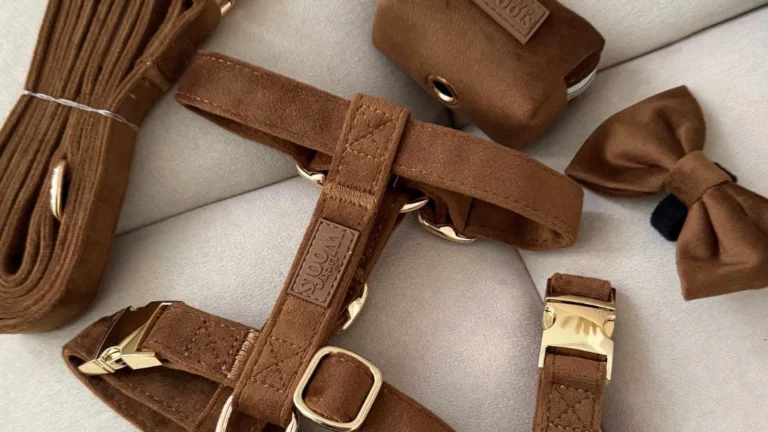
Owners increasingly look for coordinated sets:
- a dog collar
- a leash
- a harness
- accessories
A coordinated look is no longer a luxury – it’s part of the identity of the brand and of the owner.
How do you care for a dog collar?
To make dog collars last longer:
- check the stitching regularly
- clean off any dirt
- wash according to the manufacturer’s instructions
- check the metal parts
Regular care extends the life of a dog collar.
A good dog collar means more than just a piece of gear
The right dog collar is:
- safe
- comfortable
- good quality
- attractive
- suited to your dog
Don’t choose by colour alone.
Choose by functionality, material and craftsmanship.
Because a dog collar isn’t just an accessory.
It’s something your dog wears every single day.